
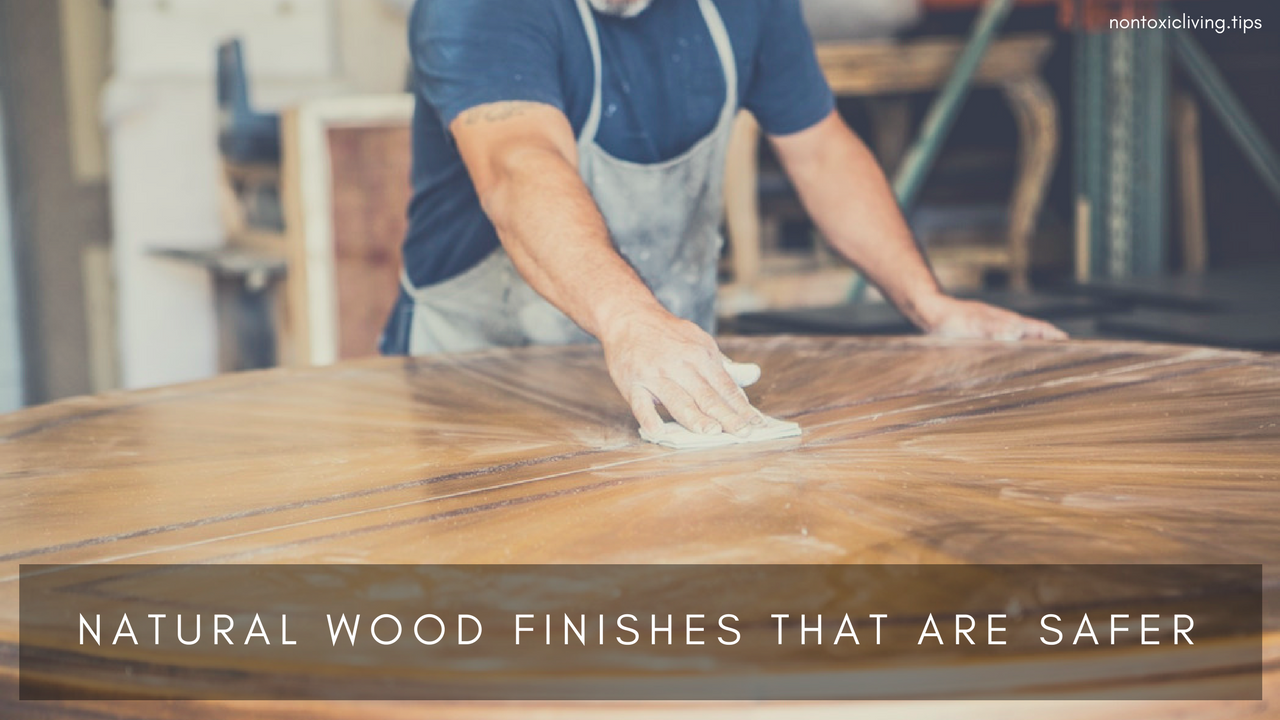
Natural Wood Finishes That Are Safer
Dec 27, 2017by Angela Cummings and Sophia Ruan Gushée
Wood finishes are the top protective coating that is applied to wood to protect it from moisture, sunlight and everyday wear and tear.
Sometimes finishes are confused with stains. Stains are coloring that simply, well, stain the wood a particular color. After that, a finish is applied to seal the wood and protect it from everyday wear and tear. Finishes can have a yellow tint to them and change the color appearance of wood, but is not a staining agent. Some people prefer to leave wood in its natural color and simply apply a finish to the wood for protection.
The National Wood Flooring Association lists seven types of wood finishes that vary in color, durability and sheen. (1) They give a brief overview of the types of sheen (gloss to matte), explain what a surface finish is (it remains on the surface of the wood to protect it), and lets the reader know which finishes will yellow over time.
But what about their chemical makeup and effect on health?
Standard finishes such as varnish (2), lacquer and oil-based finishes (3) have been found to off-gas higher amounts of VOCs and may be causing short and long term health concerns. How can you choose finishes with less VOCs in them? Below are a few of the best natural wood finishes to consider using in your home.
Three Best Natural Wood Finishes
1. Natural Finishes
Made from natural ingredients like linseed oil and beeswax, natural finishes are made from plant or animal based materials. Natural oil finishes, such as linseed, are plant-based and have fewer chemicals and VOCs than other types of finishes. Both oil and wax options provide a durable finish however they are less durable than other finishes on the market. It should be noted that the wax finish can show water spots. (4) Natural finishes are one of the least-chemical options available right now. These finishes may need to be reapplied annually.
2. Shellac
Shellac has been around for ages and is a natural finish that is made from an insect. It’s made from the secretion from the female lac bug combined with a solvent. There are different types of solvents that can be used to make Shellac. If methanol solvent is used, the product should be avoided according to the Environmental Working Group. (5) Shellac is a less-durable product compared to other finish options and can be used on furniture but is not suggested as a finish for flooring or other areas that see a lot of wear and tear.(6)
3. Water-based
If you’re looking for a finish that is clear, will resist yellowing over time and emit less VOCs than some finishes, you may be looking for a water-based finish. Water-based finishes are very durable (7) and, generally speaking, do not release as many VOCs as oil-based finishes. (8) Plus, they clean up with water (and not solvents). Look for zero- or low-VOC water based finishes.
VOCs aren’t the only class of chemicals that can be harmful to health. Other types of chemical families including solvents, Semi-Volatile Organic Compounds (SVOCs) and Hazardous Air Pollutants’ (HAPs) may also be harmful to health. At this time VOC amounts are required to be printed on paint labels; however, measurements for other chemicals are not. Adding to the difficulty, manufacturers are not required to list all ingredients on labels and many have been reluctant to volunteer that information.
While the amount of VOCs (e.g. zero-VOC, low-VOC) is not the only measurement when determining a healthier product, it’s the measurement that appears on paint, stains and finishes across manufacturers.
In Summary
Using natural wood finishes can lead to a healthier home environment, but provides a less durable finish. Be strategic about what type of finish you use for each wood product in your home. When finishing low-impact wood pieces such as clocks, picture frames, and decorative boxes where durability isn’t a concern, consider using a finish that may be less durable but healthier. For flooring and other high-impact areas consider using a more durable water-based finish that is a zero- or low-VOC product.

Enroll in the D-Tox Academy to detox your home and life at a pace that’s comfortable for you.
The D-Tox Academy gives subscribers access to specific brands of products, and tips for how to use and maintain products. The academy includes short videos and check lists that are helpful when making healthier changes.
References
(1) (4) Wood Floors
(5) (6) EWG