
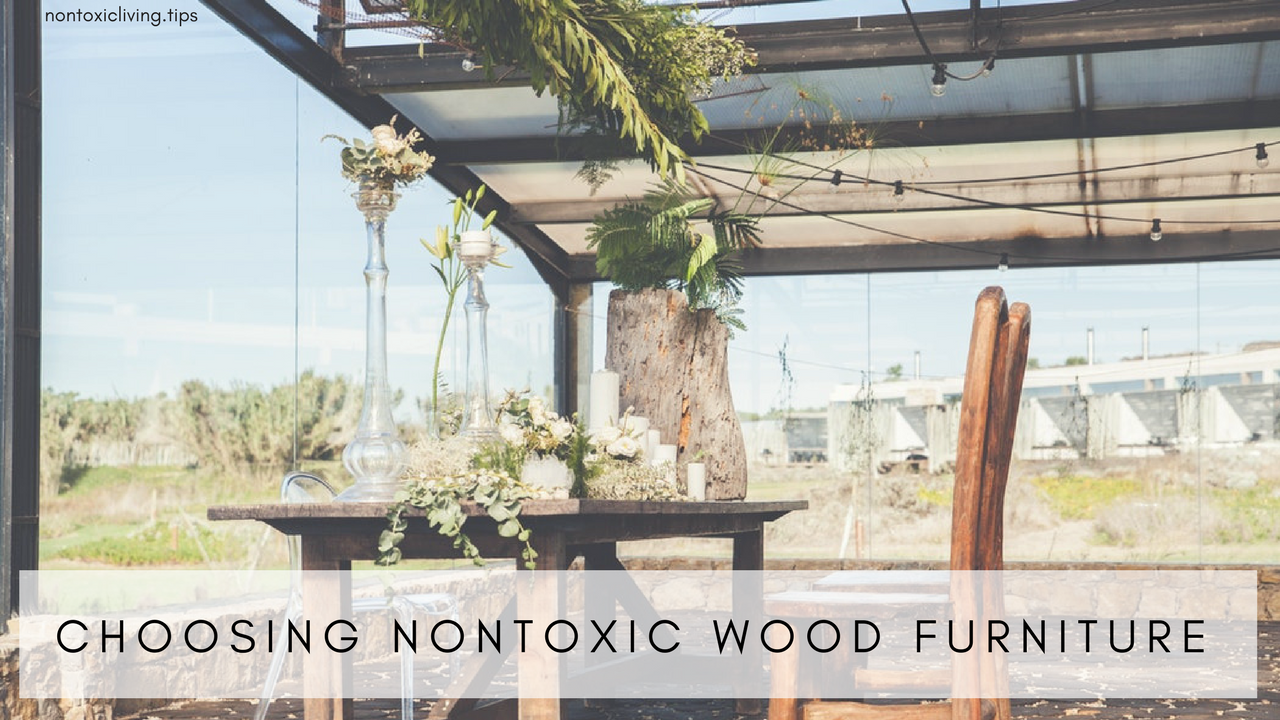
Choosing Nontoxic Wood Furniture
Jan 02, 2018by Angela Cummings and Sophia Ruan Gushée
Wood furniture—such as couches, chairs, bed frames, box springs, tables and many more products—can be made from composite wood or solid wood. If you're hoping to choose the healthiest wood furniture for your budget, then consider the three key ideas below.
1. Adhesives & Resins
Composite wood is made from wood pieces or wood dust that are held together with adhesives or resins. Resin is a material that is typically made of plastic.
Common types of composite woods are plywood, particle board, MDF (medium density fiberboard), and sometimes simply called composite wood. For example, composite decking is made from wood particles and resin.
Solid wood, on the other hand, is made 100 percent from wood. That means that solid wood is not made with adhesives and resins or other chemical binders.
2. Solvent Chemicals
Composite wood products are made of adhesives and resins that often contain a class of chemicals named solvents. Solvents may cause cancer and affect the nervous system, reproductive system, liver and kidney systems, and respiratory system. (1)
3. VOCs in the Air
Volatile Organic Compounds (VOCs)—such as formaldehyde—are emitted from various things in the home. From furniture, they often come from the adhesives and resins used to make composite wood products, wood finishes, and the glues that adhere furniture parts together. Natural soft woods, such as pine, also contain VOCs that off-gas into the air.
VOCs may affect the immune system, respiratory system, and cause cancer. (2) Furniture made with solid hardwood material and finished with a zero- or low-VOC finish release fewer VOCs into the air and is widely accepted as one of the least toxic types of wood.
In Summary
Ideally, nontoxic wood furniture is made of solid 100% hardwood, nontoxic glues, and zero- or low-VOC finishes (stains, finishes or paints). This will be much more expensive. So, the three key ideas noted above explain why you'll have to pay a lot more for nontoxic wood furniture. These three key ideas should also help you ask smart questions when shopping for healthier furniture, and deciding how best to prioritize your budget.

Register for more information about the D-Tox Academy. The D-Tox Academy will simplify and support your efforts to create a healthy home. A healthy home is essential for a healthy body and a healthy planet.
References