
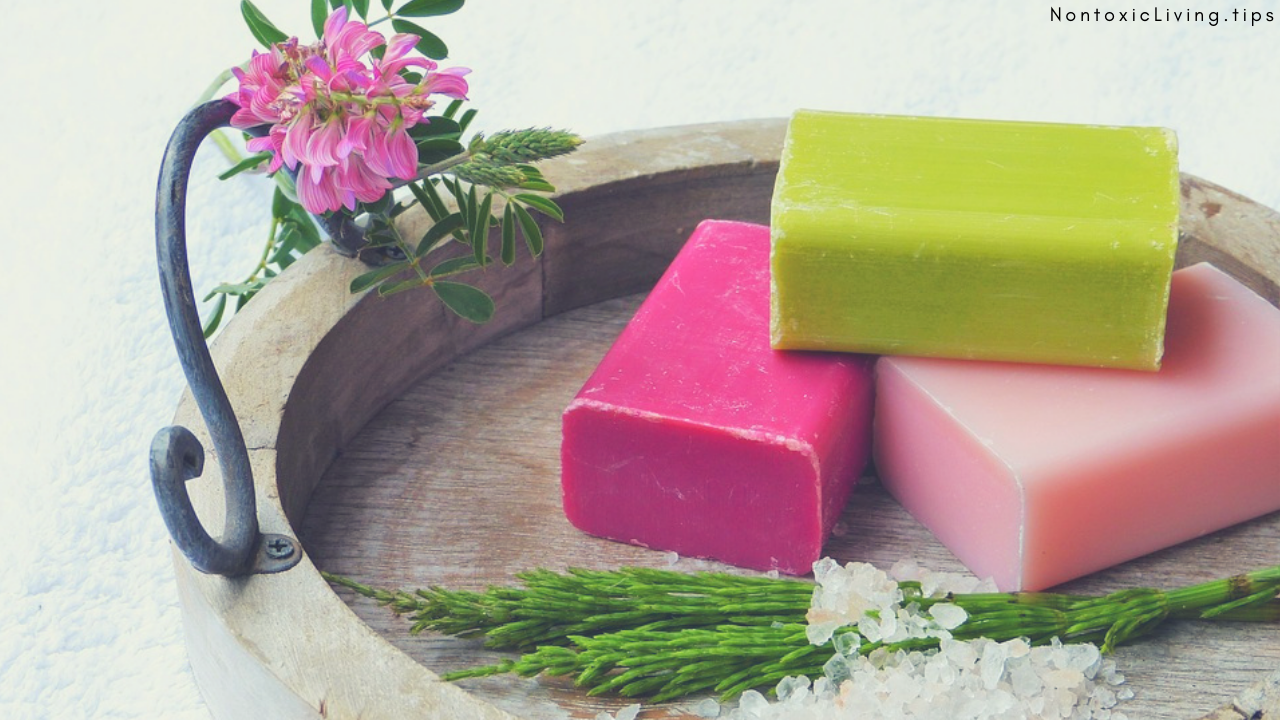
4 Tips for Nontoxic Hand Soap
Oct 29, 2018By Angela Cummings and Sophia Ruan Gushée
Nontoxic hand soap is better for all of us, but especially mothers of babies and young kids, because what's on our hands can make their way into our children's bodies. Babies will chew on our fingers, and our hands touch many things that go straight into our children's mouths, like teething rings.
Therefore, it may be worthwhile to reconsider the type of handsoap you’re using.
In this article, we’ll look at the toxic chemicals in conventional handsoaps, possible health effects, and practical nontoxic options.
What are the toxic chemicals in conventional handsoaps?
There are often more than 10 toxic chemicals in conventional handsoaps.
Some of these chemicals are from ingredients and some are unintentional byproducts (which are created unintentionally when two or more chemicals are combined).
Here are the top four ingredients to avoid:
1. Formaldehyde. As a preservative, formaldehyde is found in a variety of soaps, including liquid soap. It allows for a longer shelf life and prevents bacteria and fungi from forming. While the label may not say formaldehyde, look for other common preservatives that may form formaldehyde unintentionally. According the American Cancer Society, examples of chemicals that are used as preservatives that can release formaldehyde include:
- Benzylhemiformal
- 2-bromo-2-nitropropane-1,3-diol
- 5-bromo-5-nitro-1,3-dioxane
- Diazolidinyl urea
- 1,3-dimethylol-5,5-dimethylhydantoin (or DMDM hydantoin)
- Imidazolidinyl urea
- Sodium hydroxymethylglycinate
- Quaternium-15
2. Surfactants/Sulfates. Known for making foam and cutting grease, surfactants and sulfates are present in many types of soap. In personal care products (such as soap), surfactants are often called sulfates. Most products that fall into this class of chemicals are made with petroleum.
3. Synthetic fragrance. Made of any number and any combination of chemicals, synthetic fragrances can be an unknown mix of chemicals. Often, products are generically labeled with “fragrance.” This is because trade secret laws don’t require individual chemicals to be listed.
4. Triclosan. An antibacterial, triclosan is found in many antibacterial soaps. There is widespread concern that antibacterial soaps are causing a resistant strain of bacteria. Chemicals in the antibacterial family are often listed as triclosan and triclocarban.
How do these chemicals harm our health?
These top four chemicals may impact both our health and a baby’s health. In fact, it may impact children and adults of all ages. Here is a list of possible health effects:
Formaldehyde
- cancer – various types including cancer of the throat, nose, and blood
- irritation of eyes, nose, throat, skin
- menstrual cycle disruption
Surfactants/sulfates
- asthma
- respiratory issues
- skin allergies and irritation
- environmental issues
- cancer
- hormone disruption
Synthetic fragrance
- potential endocrine disruptors
- irritants
- neurotoxins
- immunotoxins
- reproductive toxins
- carcinogens
- feminization of US male babies
- respiratory distress
- central nervous system depression
- earaches in infants
- hormone disruption
- birth defects and lifelong
- reproductive damage
- skin, eye, and lung irritation
- allergic
- reactions
- headaches
- nausea
- shortness of breath
- muscle weakness
- cancer
Triclosan
- thyroid dysfunction
- reproductive hormones
- liver harm
- immune system toxicity
- sense organ toxicity
What are the practical nontoxic options?
When finding soaps that are safer, consider following these four tips:
1. Skip antibacterial. Products that have antibacterial in the title are easy to spot. Instead of buying antibacterial, consider choosing soap without it. The American Medical Association and the American Academy of Microbiology agree that washing hands with soap and water is an effective way to kill germs.
2. Look for organic castile soap. Castile soap is made of vegetable oils and is widely considered one of the healthiest soaps. Look for organic castile soap in order to avoid pesticides and chemicals used during the making of soap.
3. “Fragrance-free.” Soaps labeled “fragrance-free” are often free of fragrances. At times, products labeled fragrance free may have natural smells or added scent, along with a chemical that masks the scent. However, choosing fragrance-free products seems to be the best chance of a truly fragrance-free soap.
4. Avoid ingredients. Check labels for chemical ingredients. Below is a list of the commonly found names for formaldehyde, surfactants/sulfates, synthetic fragrance and Triclosan (in alphabetical order).
- 2-bromo-2-nitropropane-1
- 3-diol(bronopol)
- ammonium laureth sulfate
- ammonium lauryl sulfate
- diazolidinyl urea (Germall II)
- diethanolamine (DEA)
- DMDM hydantoin
- fragrance
- imidazolidinyl urea (Germall 115)
- monoethanolamine (MEA)
- quaternium-15
- sodium hydroxymethylglycinate
- sodium laureth sulfate (SLES)
- sodium lauryl sulfate (SLS)
- sodium myreth sulfate
- triclocarban
- triclosan
- triethanolamine (TEA)
- urea compounds
Conclusion
Nontoxic hand soap is better for all of us, but especially mothers of teething babies who often chew on our hands for relief. Find handsoaps that are healthier and may be safer for all ages.